Absence of Insurance Cover for Airports Exposes FG to Heavy Losses, Compensation Claims
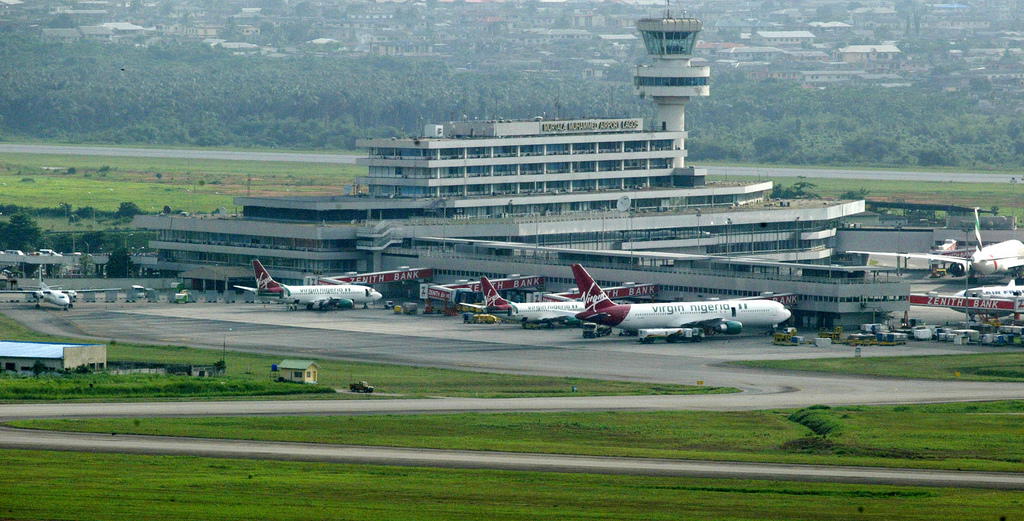
The Federal Government may be forced to shoulder the entire financial burden of the recent fire incident at the Murtala Muhammed International Airport (MMIA), Lagos, following revelations that the nation’s airports are operating without insurance cover.
The airport, managed by the Federal Airports Authority of Nigeria (FAAN), suffered a fire at its international terminal. Investigations by Financial Vanguard indicate that months after the incident, no insurance company has reported claims exposure or liability, raising serious concerns about the protection of critical aviation infrastructure.
The implication is that the government will not only fund the rehabilitation of the burnt terminal, estimated at over one billion naira—but will also be responsible for compensating victims and settling all related medical expenses. This comes despite an earlier Federal Executive Council approval of N712.26 billion for the comprehensive rehabilitation of the airport’s Terminal One, granted before the fire outbreak.
Commissioner for Insurance, Mr. Olusegun Omosehin, confirmed that no insurance company has paid claims in respect of the airport fire. “I am not aware of the entities that covered the airport. If there was cover on that property, claims must be paid. That is where we stand,” he stated.
Industry experts note that while aviation regulations make insurance compulsory for all aircraft operating in the country, there is no regulatory requirement compelling airport operators to insure terminals and related infrastructure. The Nigerian Civil Aviation Regulations previously mandated international airports to maintain coverage of about $250 million and domestic airports around $100 million, but those provisions were removed in the 2022 review of the regulations.
Retired Group Captain John Ojikutu, an aviation analyst, held the Nigerian Civil Aviation Authority (NCAA) responsible. “The impact of an uninsured airport would be huge financially, especially for government. Government would have to start allocating large sums of money to rebuild such infrastructure. Those who do business at the facility could also be forced out of business,” he said.
Chris Aligbe, former General Manager of Public Affairs for the defunct Nigeria Airways and now CEO of Belujane Konzult, stressed the importance of airport insurance. “It is very important that we insure our airports because in other countries, the amount of money that is being used to develop or renovate airports is usually not spent by governments these days,” he said.
Sunny Adeda, former President of the Chartered Insurance Institute of Nigeria (CIIN), observed that the stringent insurance regulations applied to aircraft do not extend to airports. “While these strict regulations are in place to keep airlines in check, the regulation of the airports is just left to the whims and caprices of FAAN, which is not supposed to be so,” he said.
Babajide Olatunde-Agbeja, a former President of the Nigerian Council of Registered Insurance Brokers (NCRIB), recalled that airports used to be insured about a decade ago but expressed uncertainty about the current status. He urged the government to ensure all its assets are insured. “When I was president of NCRIB, we liaised with government and they issued a circular mandating all parastatals, ministries, departments, and agencies to ensure that all government assets are insured. I don’t see any reason why government assets should not be insured. Government must insure all their assets, personnel, and liability,” he stated.
Amid the non-coverage of airport infrastructure, data from the insurance industry reveals a steady growth in combined aviation and marine insurance premiums. The strongest growth in five years came in 2024, with aviation and marine premiums surging 73.9 per cent to N128.2 billion from N73.7 billion, while claims rose by 106 per cent to N64.2 billion. In 2025, the segment grew a further 45.9 per cent to N187.1 billion. Operators, however, say the bulk of this premium originates from marine business, with aviation contributions primarily coming from aircraft covers, not airport assets.