IATA Warns Europe and Africa: Reform Aviation Policies or Face Economic Decline
The International Air Transport Association (IATA) has issued stark warnings to governments in both Europe and Africa, urging far-reaching policy reforms to prevent further erosion of their aviation sectors and the broader economic fallout that would follow.
While the challenges on each continent differ sharply, IATA cautioned that the result of continued regulatory missteps is the same: a steadily weakening aviation industry that undermines jobs, trade, and long-term growth. The global airline body did not hold back in its latest interventions, delivering uncomfortable truths to policymakers in Brussels and to African governments still struggling to build a conducive operating environment.
In Europe, IATA’s frustration is that it has been delivering the same warnings for years as policy drifts further in the wrong direction. Air connectivity across the European Union grew by just 1% in 2025, below the continent’s compound annual growth rate of 1.5% over the past decade, a performance IATA describes as a “flatline.”
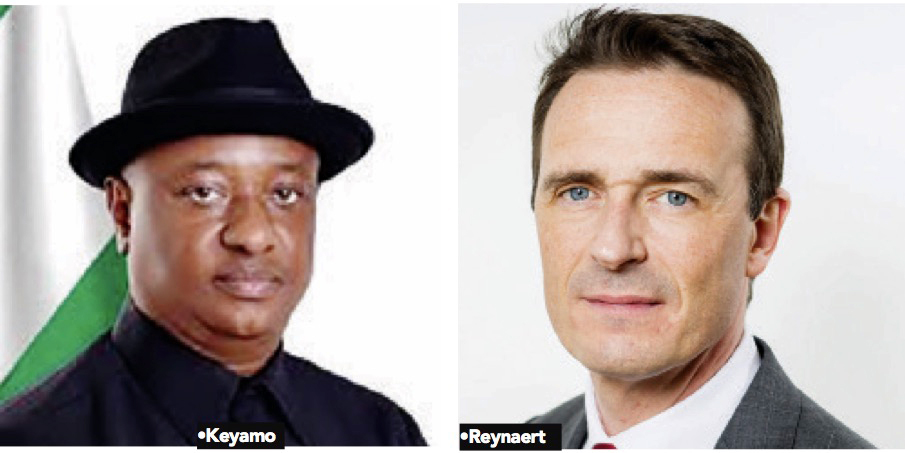
Thomas Reynaert, IATA’s Senior Vice President for External Relations, said the negligible growth was no surprise. “The regulatory burden is onerous, costs are high, and the EU’s well-documented underlying competitiveness issues have not been seriously addressed. Consumer protections are a case in point. The flaws of the current regulation have been known but attempts to correct them appear to be doomed to just make them worse. These are the kind of frustrations that make it more difficult for airlines to grow the connectivity that Europe relies on to power jobs and economic growth.”
In 2025, 1,127 routes were cancelled across the EU, against 1,281 additions, a net gain of only 154 routes. For a sector that supports over 9.2 million jobs and generates €760 billion in GDP across the bloc, a 1% growth rate is not a success story.
At the centre of IATA’s grievances is EU261, the passenger rights legislation governing compensation for delays, cancellations, and denied boarding. The association says the regulation, intended to protect consumers, has become an €8 billion annual cost burden for European airlines. IATA is not calling for passenger rights to be scrapped but wants the time thresholds that trigger compensation obligations to be raised. Without reform, thinner, less profitable regional connections that serve communities will become increasingly difficult to justify.
The aviation body also took aim at Europe’s Sustainable Aviation Fuel mandates, arguing that the e-SAF sub-target should be eliminated. IATA insists it is not opposed to cleaner fuels but says the current mandate drives up costs without actually increasing sustainable fuel production. It is proposing a ‘book-and-claim’ system that would allow airlines to purchase SAF where it is produced most efficiently, rather than being locked into expensive supply chains. Revenues from the Emissions Trading Scheme, IATA added, should be redirected to lowering SAF production costs instead of functioning as a general fiscal instrument.
IATA further urged the EU to strengthen the regulation of airport and air navigation charges, costs that continue to rise even as airlines have little power to contest them, and called for the elimination of passenger taxes, following Sweden’s example. The prescription for Europe, in summary, is fewer mandates, lower costs, and greater commercial freedom for airlines.
If Europe’s problem is an excess of economically damaging regulation, Africa’s is the absence of policies that allow aviation to function as a normal market. Addressing the Focus Africa Conference in Addis Ababa, IATA’s Regional Vice President for Africa and the Middle East, Kamil Alawadhi, laid out an aviation strategy built on safety, cost-competitiveness, energy security and sustainability, and ease of doing business. For Africa, the call was not for deregulation but for better governance.
Top of the list is the blocked funds crisis. As of the end of March 2026, African governments were holding $774 million in airline revenues that carriers are legally entitled to repatriate under bilateral agreements but cannot access. Algeria leads with $258 million, followed by the XAF Zone ($105 million), Mozambique ($82 million), Eritrea ($78 million), and Angola ($73 million). IATA warned that governments are failing to honour obligations they have already agreed to, leaving airlines with revenue they cannot spend, invest, or send home, an existential threat in a capital-intensive, thin-margin industry.
Aviation costs in Africa are 15% above the global average, driven largely by government-imposed charges that IATA says contravene international civil aviation standards. Tanzania’s API-PNR charge of $45 per one-way trip is the highest in the world; similar levies in Angola, the Democratic Republic of Congo, Nigeria, Ghana, and Kenya far exceed global norms. These charges directly inflate ticket prices and determine whether routes are viable at all.
Visa policies remain another brake on growth. Nearly half of all intra-African travel still requires visas to be obtained before departure, suppressing regional mobility, dampening tourism, and working against the goal of economic integration. Where visa requirements have been eased, IATA noted, tourism revenue has strengthened, routes have become more resilient, and regional air services have improved.
Though the battles in Europe and Africa are distinct, EU261 and e-SAF mandates on one hand, blocked funds and visa liberalisation on the other—IATA’s underlying argument is identical. Governments that view aviation primarily as a source of revenue are making themselves poorer in the long run. Every route not launched, every connection cut, and every traveller priced out of the market represents an economic opportunity that never materialises.
“Aviation is the economic infrastructure for Africa. Its value lies in the long-term benefits it delivers. An aviation strategy focused on safety, cost-competitiveness, energy security and sustainability, and ease of doing business will create jobs, enable trade, support tourism, and further regional integration. The prosperity this generates will allow governments to push forward social and economic development more durably than any tax that might be collected from travellers,” Alawadhi said.
For Europe, Reynaert’s message was equally blunt: a flatlining network is the predictable result of policies that ignore competitiveness. Unless both continents change course, the economic consequences will be severe.