Obayendo Sounds Alarm: Nigeria Nearly a Century Behind in Transport Formalisation, Pushes for GDP Growth Beyond 1.56%
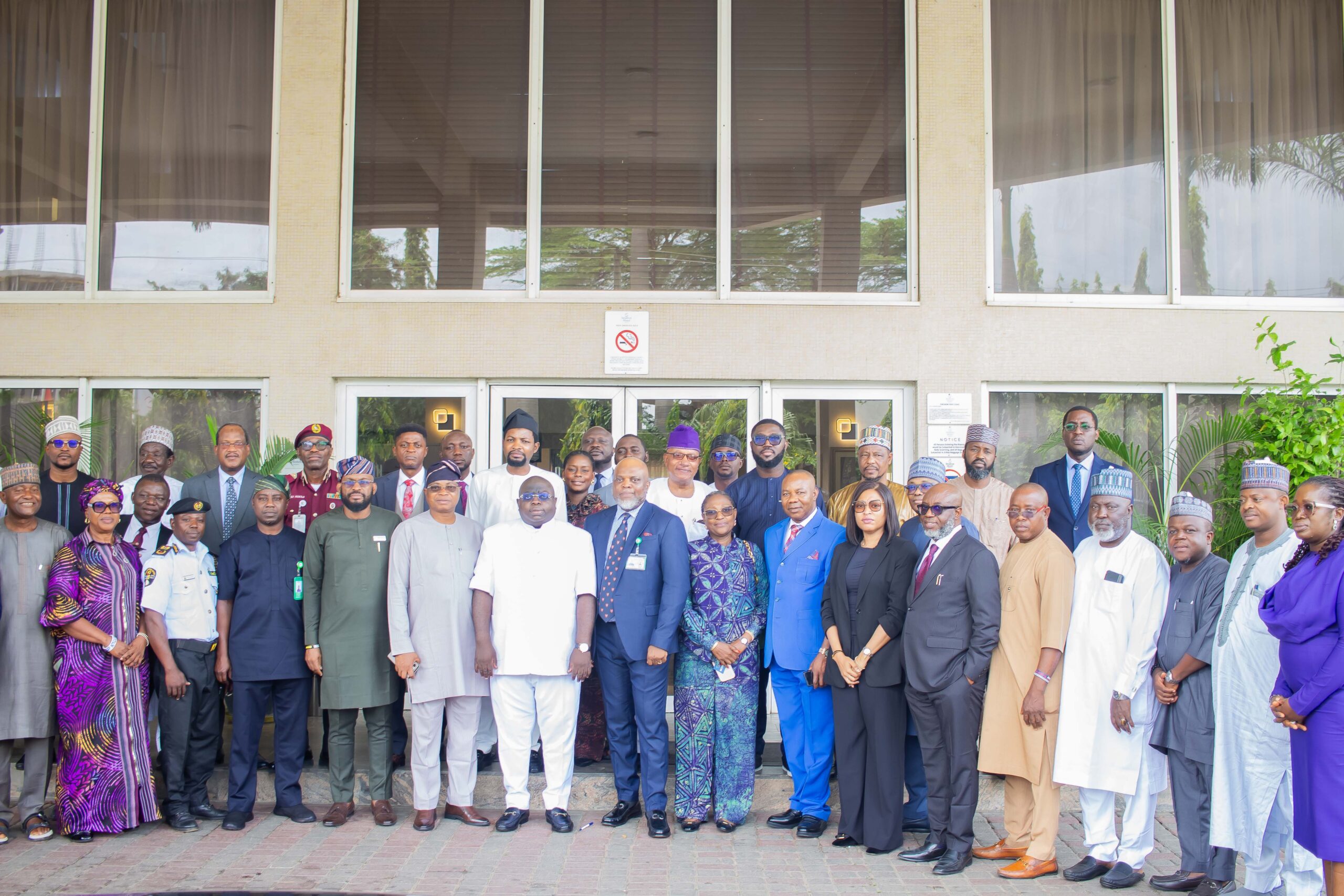
There is a statistic that keeps resurfacing in Nigeria's transport policy circles, and it is one that should unsettle anyone who cares about the country's economic future. Road transport moves over 90 per cent of Nigeria's passengers and freight, yet the transport and storage sector contributes just 1.56 per cent to Gross Domestic Product. That gap between what road transport does and what it is worth, between its indispensability and its undervaluation, was the central preoccupation at a stakeholder engagement convened by the Office of the Vice President in Abuja on Monday under the banner of the Presidential Initiative on Road Transport Transformation.
Prince Segun Obayendo, Technical Adviser to the Vice President on Transportation, Logistics and Innovation, chose to open his remarks not with Nigeria's present challenges but with Europe's past solutions. Germany formalised its transport sector in 1935. France followed in 1936. The United Kingdom did the same in 1937. From those moments forward, Obayendo noted, these nations began extracting measurable economic value from road transport. "We have now reached the point where our unions and associations must be enhanced, supported and given the wherewithal to do more," he told the gathering. The implication was not lost on anyone present: Nigeria is nearly a century behind.
Obayendo then invoked a more provocative historical parallel. The Berlin Conference of 1831 to 1836, he reminded the room, was where a handful of individuals sat down and divided Africa. "They were not bigger than us here," he said. "Today we are still contending with that meeting. We are here today to determine the destiny of road transport." It was a rhetorical move designed to elevate the stakes. This was not merely a policy workshop; it was a moment of national self-determination for a sector that has languished for too long.
The statistics Obayendo presented were equally sobering. Forty per cent of commercial vehicles fail basic roadworthiness tests. Eighty per cent of crashes are traceable to human factors. The national road network spans over 195,000 kilometres, yet seventy per cent is rated poor or unreliable. Nigeria's vehicular population exceeds 13 million, and the pressure on the country's roads intensifies with each passing year. These figures, some dating back to 2013 and 2017, underscore a more profound problem: Nigeria does not possess current, reliable data on its own road infrastructure.
Dr. Tope Fasua, Special Adviser to the President on Economic Affairs, opened the engagement on behalf of Dr. Aliyu Umar Modibbo, Senior Special Adviser to the President on General Duties. He conveyed the greetings of Vice President Kashim Shettima, who chairs the National Road Safety Advisory Council and is personally driving the reform agenda. Fasua outlined five priority areas that will define the initiative: road safety and professional driver development; digital vehicles, drivers, data and infrastructure; modernisation of the national road network; sustainable management of the private sector; and stronger coordination across federal, state and local governments. "We want to see an institution that transforms this sector of government, something that depends on partnership, shared responsibility and measurable implementation," Fasua stated.
One of the more consequential clarifications to emerge from the engagement was Obayendo's categorical assurance that the initiative would not create a new government agency. The National Road Safety Advisory Council, first established in February 2017 and re-inaugurated in October 2024 by Vice President Shettima, will remain at the apex. The Presidential Initiative will operate in alignment rather than independently. "Rather than creating something parallel, we said let us put a structure together that will work in alignment with NARSAC because the goal is the same," Obayendo explained. "Any transportation system that is not safe is as worthless as anything."
The implementation model is deliberately lean. No mass recruitment will take place. Desk officers will be seconded from existing personnel in every Ministry of Transport across the 36 states and the Federal Capital Territory, supplemented by 774 desk officers drawn from local government staff. "We want to be all-inclusive as much as we can," Obayendo said. "Whatever we agree here can be better cascaded to the grassroots."
With representatives from the Central Bank of Nigeria, the Bank of Industry and the Development Bank of Nigeria in the room, Obayendo made a direct appeal for single-digit interest rates to support fleet renewal and maintenance. "Anything other than that, going to 30 per cent or thereabouts, will be passed to the populace, and the populace will cry that they are paying too much in fares," he cautioned. "We cannot totally blame the operators when commercial bank loans attract 30 to 33 per cent interest and demand multiple collaterals." This structural obstacle explains the prevalence of ageing, unsafe and environmentally harmful commercial vehicles on Nigerian roads. Without affordable credit, operators cannot refresh their fleets, and without fleet renewal, the safety and emissions crisis worsens.
Obayendo was equally pointed on the question of Intelligent Transport Systems. "Before we can talk about intelligent transport system, we must ask: where is our data? Where is our interoperability?" He referenced the Federal Capital Territory's ITS pilot, which succeeded because the system ran 24 hours, recording vehicles as they passed. He also revealed that the Presidential CNG Initiative has significant resources available and intends to aggressively extend pocket-friendly conversion tools nationwide for commercial use. On driver licensing, he cited Dubai's point-based system as a benchmark. "You break one traffic light, then a second, your licence is minus three, and before you know it, you are disqualified or sent to jail. It is that seriousness that we are appealing to all of us to change the narrative."
Fasua later delivered the technical presentation titled Repositioning Road Transport Sector in Nigeria for the $1 Trillion Economy Target, in which he argued that the sector must be transformed into a measured, bankable growth engine rather than merely the economy's arterial system. The figures he presented were compelling: real GDP grew 4.43 per cent in the second quarter of 2026, the fastest second-quarter growth in five years. The naira is trading near a two-year high of approximately ₦1,330/$, external reserves stand at approximately $54.5 billion, and nominal GDP reached ₦119.3 trillion, representing 18.4 per cent year-on-year growth. However, the $1 trillion target demands roughly 24 per cent annual dollar-denominated growth over five years, more than double the current pace.
Fasua highlighted a paradox that has haunted transport economists for years: road transport carries 90 per cent of passengers and freight, yet transport and storage accounts for only 1.02 per cent of real GDP, placing it outside Nigeria's top ten economic activities, behind trade at 17.9 per cent and crop production at 17.7 per cent. The value of delivered goods is recorded in trade and agriculture, while the cost of poor roads, fuel and levies is borne across all sectors. His blueprint includes tolling and concessioning four legacy corridors: Lagos to Calabar, Sokoto to Badagry, Calabar to Abuja, and Akwanga to Jos to Bauchi to Gombe, under a 30 per cent federal counterpart and 70 per cent loan structure. A quarterly road scorecard, published alongside NBS GDP releases, would monitor progress.
Engr. Dr. Emmanuel Oche John, Chief Executive Officer of Ochenuell Mobility Solutions, brought a practitioner's urgency to the funding conversation. His paper, Accessing Funding for Urban Mobility Development, depicted a nation urbanising faster than its infrastructure can accommodate. Nigeria's population is approximately 242 million, expanding at 2.1 per cent annually, with 55.8 per cent residing in urban areas. At least 19 cities now surpass one million residents, and 62 per cent of Nigerians are aged 24 or younger. Yet only six to ten per cent of households own cars, and up to 90 per cent of vehicles on the road are used. Dr. John proposed a five-year ₦500 billion National Urban Mobility Intervention Fund, a National Lead Agency for Urban Mobility, and state-level intervention funds with dedicated budget lines. His conclusion was forthright: "Money is not as much a problem as the governance framework and technical capacity. The consequences of inaction are worse than the price of action."
Dr. Sani Barau, Special Adviser to the Director General of the Nigerian Institute of Transport Technology, presented the institute as the technical engine of the initiative. He pinpointed three core problems: jurisdictional silos between federal, state and local tiers; weak enforcement resulting in duplicate inspections and conflicting roadside mandates; and exorbitant logistics costs compounded by a scarcity of certified manpower. "Fragmentation costs lives, revenues and opportunities," Dr. Barau warned. "Time for a unified approach."
Engr. (Mrs) Abimbola Akinajo, Managing Director of the Lagos Metropolitan Area Transport Authority, delivered the keynote address, grounding her message in Lagos's institutional experience. She described road transport as the critical connector, linking homes to workplaces, farmers to markets and manufacturers to supply chains. Akinajo proposed a National Vehicle Entry, Safety and Environmental Compliance Standard, stronger maintenance and inspection systems, and the professionalisation of vehicle inspectors and roadworthiness technicians. She advocated for fleet renewal, cleaner fuels including CNG and biogas, electric mobility where feasible, and improved fuel efficiency. "Infrastructure may be the project output; institutional capacity is the lasting legacy," she remarked.
The engagement posed a question that will shape the next two decades: if Germany, the United States, the United Kingdom, South Africa and China have built integrated institutional frameworks to manage increasingly complex road transport systems, what should Nigeria's governance architecture look like? The ask was straightforward: endorse the Initiative on Road Transport Transformation and constitute the multi-sector technical committee to review and propose this integrated framework. The initiative now awaits formal endorsement and the constitution of that committee. No timeline was announced for its first meeting or for the submission of its recommendations.
Vice President Kashim Shettima, who chairs the National Road Safety Advisory Council, set the standard by which the initiative should be judged: "The success of this initiative will not be measured by the number of meetings we hold, but by the number of lives we save, the efficiency of our transport system, the dignity we restore to transport professionals, and the prosperity we create for Nigeria."