Prince Obayendo: Logistics Reboot, China Partnership Key to Nigeria’s Trillion-Dollar Push
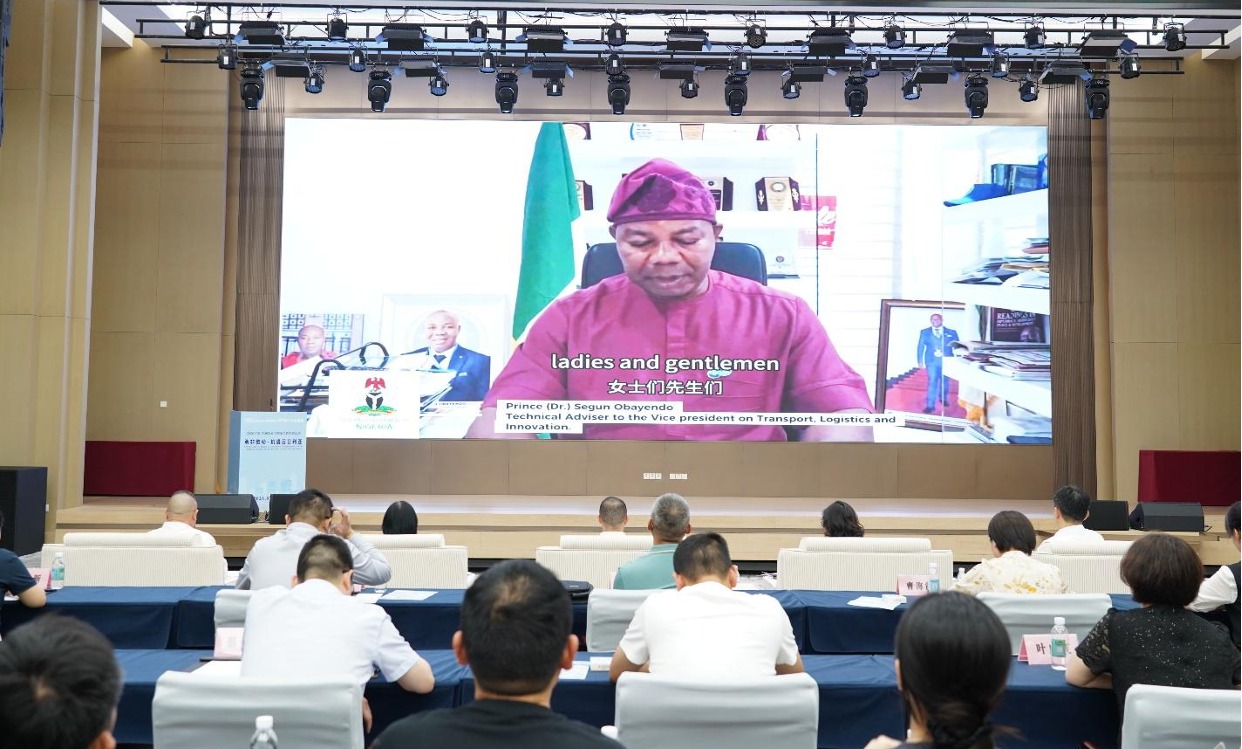
Prince Segun Obayendo, Technical Adviser to the Vice President on Transportation, Logistics and Innovation, told a global trade gathering on Sunday that Nigeria’s bid to hit a $1 trillion economy by 2030 hinges on dismantling the logistics bottlenecks that choke commerce, and that a closer working relationship with China is central to that fix.
Addressing the Ningbo-Africa Trade & Logistics Cooperation Forum by video, Obayendo sketched a government blueprint anchored on connecting seaports, inland dry ports, rail lines, highways and modern warehousing into a single corridor, a move designed to drive down business costs and position Nigeria as West Africa’s distribution hub.
“You don’t build a trillion-dollar economy on production alone,” Obayendo said. “It turns on how fast, how reliably and how cheaply you move people, goods and services. Efficient infrastructure and supply chains are what pull in investment and lock in growth.”
The forum, organized by the Pan-African Institute for Supply Chain Innovation, the Ningbo China Institute for Supply Chain Innovation and China-base Group, drew trade officials and logistics investors eager to turn policy talk into bankable projects.
Obayendo argued that Nigeria’s inbuilt advantages; location, the continent’s biggest consumer market and access to the African Continental Free Trade Area, remain blunted without dependable multimodal networks. He urged faster deployment of logistics systems that can sharpen export competitiveness and bring down operating expenses.
He identified China’s zero-tariff policy for African exports as a window the country cannot afford to miss. “Strengthen logistics, smooth out trade procedures, and you unlock exports, pull in manufacturers and move Nigerian companies deeper into global value chains,” he said.
The adviser stressed that the partnership must go beyond goods and tariffs. “We need technology transfer, industrial expansion, real infrastructure investment and skills that produce decent work for millions, in Nigeria and across Africa.”
One tangible step came during the gathering: a proposed cooperation on port and logistics infrastructure between GK&A Logistics Services Limited and China-base Ningbo Foreign Trade Co., Ltd. Obayendo called the deal a practical pathway to raising Nigeria’s cargo-handling capacity and deepening economic ties with Beijing.
“Logistics is no longer a back-office function. It is a strategic asset,” he said. “Countries that get this right become more competitive, attract greater investment and open fresh routes to development. That is precisely where Nigeria is heading.”
He added that the presidency will continue backing policies and partnerships that fuel logistics innovation, trade facilitation and industrial growth, and called on governments, development banks and private capital to deliver on the commitments made in Ningbo.