Subsidy Removed, Politics Pushed: What Nigerians Should Expect From Governors on Transport Fares
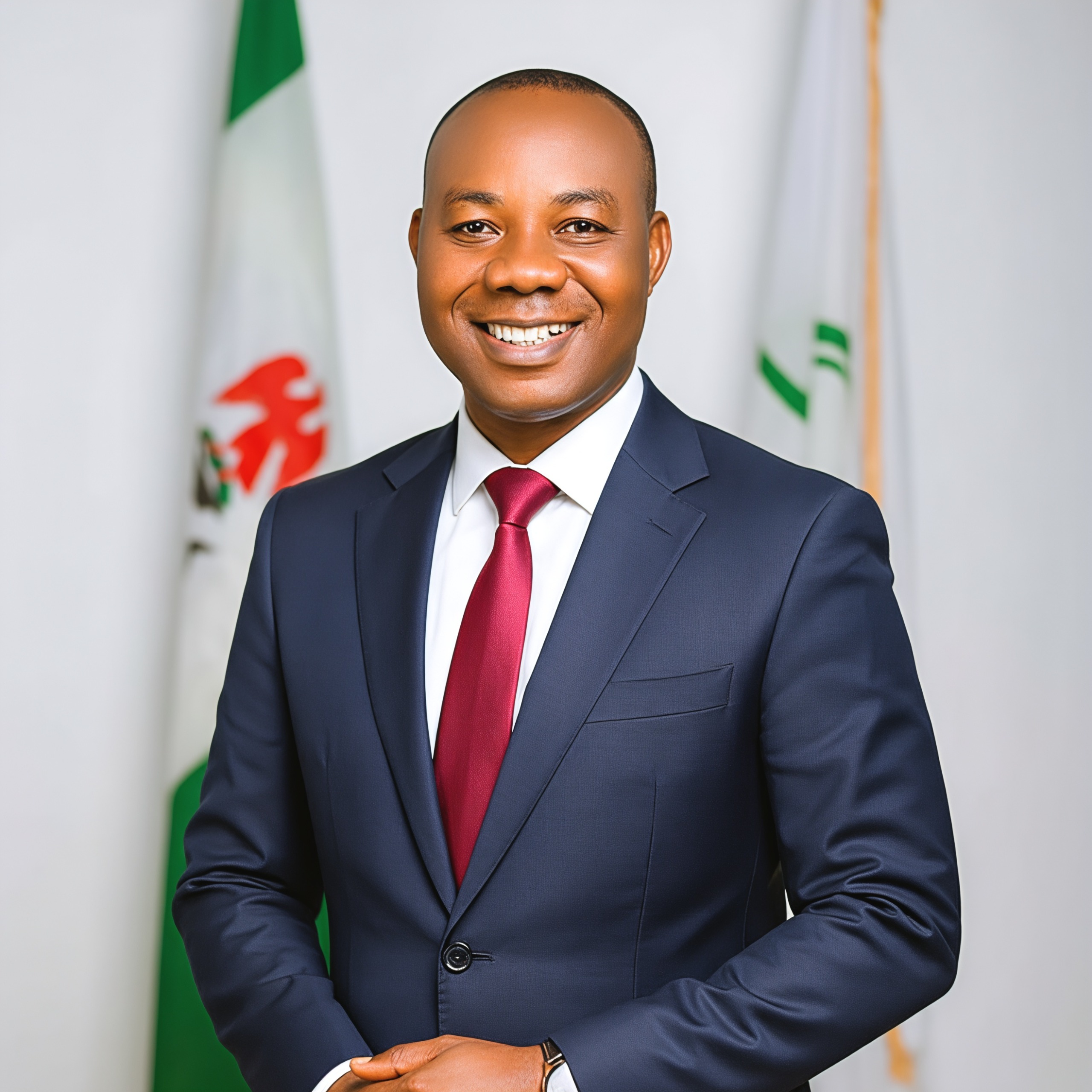
In a straight-talking appearance on TVC’s Politics Tonight, Prince Segun Obayendo, Technical Adviser to the Vice President on Transportation, Logistics, and Innovation, laid out the immense political and logistical task behind President Tinubu’s directive to slash transport fares across the states.
Obayendo who is also the National Coordinator, Transporters for Tinubu/Shetttima 2027 grounded the discussion in history, pointing out that while subsidy removal has been attempted and abandoned eight times since 1988, the current administration finally followed through with real courage.
“Some of us felt, ‘At last, somebody is addressing what should have been addressed God knows how many years ago,’” Obayendo stated. “For so long a time, every government would try, but by the time we go on the street and protest, they withdraw. It has been a step forward, two steps backward. He came in and made the announcement: subsidy is gone.”
Why This Time Is Different
Facing the interviewer’s crucial query, why should Nigerians trust this promise over past ones, Obayendo pointed directly to the political calculus. With a vast majority of state governors now sharing the President’s political platform, the structural friction is gone, paving the way for unified action.
“Everything begins with political will,” he noted. “Mr. President engaged with the subnationals because we are a federation; to get things cascaded down to the grassroots, the subnationals are critical.”
He confirmed that the "talk" is rapidly turning into action. With the National Council on Transportation actively underway in Abuja, commissioners from all 36 states have been pulled in and are assembling their local roadmaps. The idea, Obayendo emphasized, is to ensure this initiative doesn't remain merely an Abuja dilemma, but transforms into a state-level obligation backed by a tangible federal footprint.
The Real Infrastructure Push
Moving from skepticism to data, Obayendo revealed that the government is deploying infrastructure ahead of public demand, with massive shipments of conversion kits already on the ground.
“We are not just making statements for statements’ sake,” he said. “We are making statements backed with reliable data and two to three years of experience. We have 120,000 commercial vehicles converted already, and we are working to get over a million converted in the shortest possible time.”
Simultaneously, refueling architecture, both motor and data stations, is being aggressively scaled to ensure a seamless transition ahead of the president’s October 1st deadline.
Cheaper Food, Better Roads, Lower Logistics
Obayendo also tied the transport agenda directly to the cost of living. He stressed that Nigeria’s logistics costs are currently hovering between 16 and 17 percent, drastically higher than the global benchmark of roughly 8 percent. Bad roads force operators to spend excessively on spare parts, and those costs are inevitably passed down to the average Nigerian.
But CNG is merely one spoke in the wheel of a broader multimodal modernization plan. Turning to the railways, Obayendo highlighted the recent movement of 40-foot containers from Apapa to Ibadan by train, which effectively removes the equivalent of over 40 trucks from the highways. This strategic shift is drastically improving the reliability and predictability of moving goods from rural farms to urban markets.
“The way Nigerians will feel it in their pockets is when we see not much spent on refueling and not much spent on spare parts,” Obayendo concluded. “For you to make a fundamental change, every government deserves a second term. This is what the energy diversification and this campaign is all about.”